
What is Nonviolent Communication?
Enhance Your Communication Skills
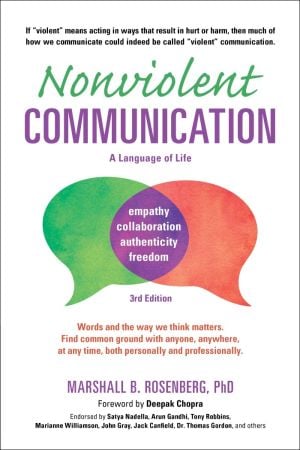
Nonviolent Communication (NVC) was developed by psychologist Marshall Rosenberg in the 1960s and 1970s. His work was heavily influenced by the emerging field of humanistic psychology, and his personal life experiences growing up in racially tense Detroit. He witnessed how quickly fear and misunderstanding could escalate into violence, and he became interested in what allowed some people to stay grounded, compassionate, and effective even in high-stress situations. He worked closely with Carl Rogers’ person-centered approach, which emphasized empathy and unconditional positive regard, and integrated these principles into a communication model that could be used by everyday people, not only trained professionals.
What makes NVC effective?
NVC offers tools to recognize what is driving our reactions, communicate without blame or judgment, and listen in a way that helps uncover what really matters to the other person. What makes it so effective is that it is an incredibly practical, learnable framework for understanding our needs, and expressing ourselves in ways that reduce conflict and increase clarity. The premise is based on the understanding that everyone shares the same basic needs for respect, autonomy, safety, and connection, and that most interpersonal tension is not caused by the fact we have differing needs but by the strategies we choose to meet those needs.
Will it be useful to me?
People learn NVC because it offers concrete benefits: fewer repeated arguments, clearer boundaries, better teamwork, improved connection with children and partners, and a more grounded way of navigating stressful interactions.
In professional settings, including healthcare, education, social services, and leadership, NVC helps reduce conflict, supports emotional resilience, and fosters collaborative cultures where people feel heard and respected.
In short, NVC is both a mindset and a skillset. It blends empathy, self-awareness, and clear expression into a method that helps people communicate in ways that lead to understanding rather than escalation.